
Henriette Seydel
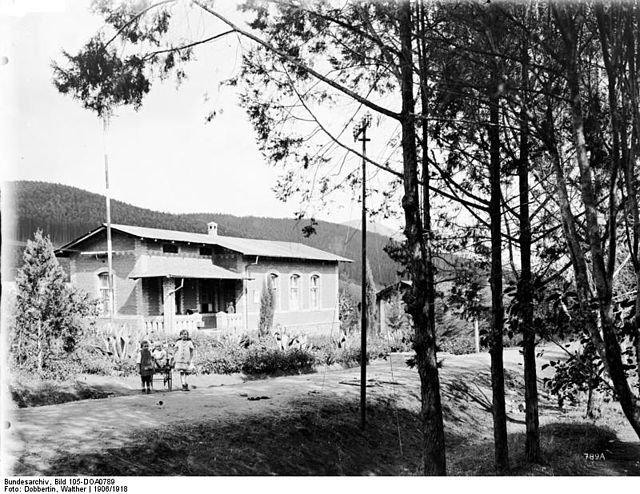
In the fertile Usambara Mountains, the people of the Pare, Buga and Shambaa communities – as their name suggests (shamba = “farm”) – have been engaged in agriculture since ancient times. Where King Kimweri, also known as Simba Mwene (“Lion King”), once ruled over one of the largest territories, the German colonialists appropriated the area in 1886 through violence and bribery after fierce resistance. They founded the town of ‘Wilhelmsthal’, named after the German emperor. In today’s Lushoto, architectural traces bear witness to the German past: for example, the former district office, the post office, and several plantation houses in the surrounding valleys.
Today, the Usambara Mountains, one of the most biodiverse regions in the world, are well worth a visit for nature lovers and hiking enthusiasts: lush forests, beautiful waterfalls, extraordinary plant diversity and rare bird species can be explored here.
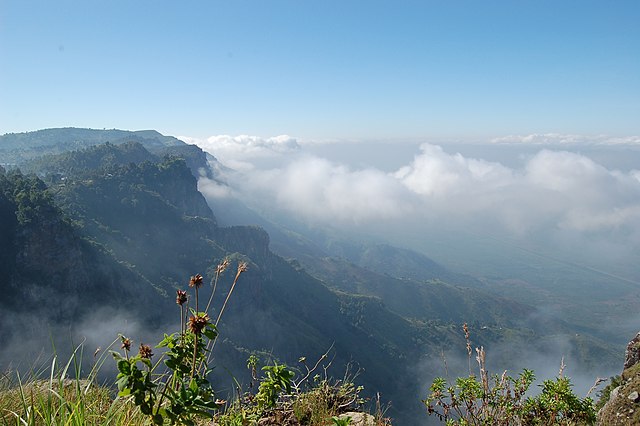
Heutzutage sind die Usambaraberge, eine der artenreichsten Regionen der Welt, für Naturliebhaber*innen und Wanderfans einen Besuch wert: üppige Wälder, wunderschöne Wasserfälle, außergewöhnliche Pflanzenvielfalt und seltene Vogelarten gibt es hier zu erkunden.
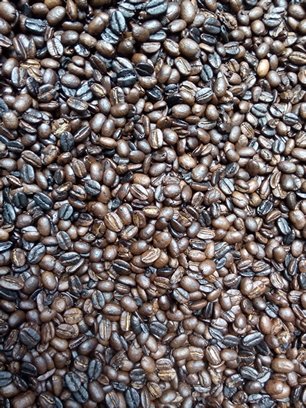
From Coffee …
Due to its mild climate and fertile soils, Lushoto and the surrounding Usambara Mountains were very popular with European settlers. The Germans were primarily interested in the economic development of the colony, especially the export of agricultural products. In 1886, the ‘German East African Plantation Company’ was founded. The fertile soil was cultivated and many plantations were established, where the locals were forced to work under duress and violence. For example, the Germans grew sisal, cotton and coffee here. Large parts of the rainforest were cleared for timber production. The Usambara Railway was used to transport the goods by rail to Tanga or Dar es Salaam, from where they were shipped to Germany.
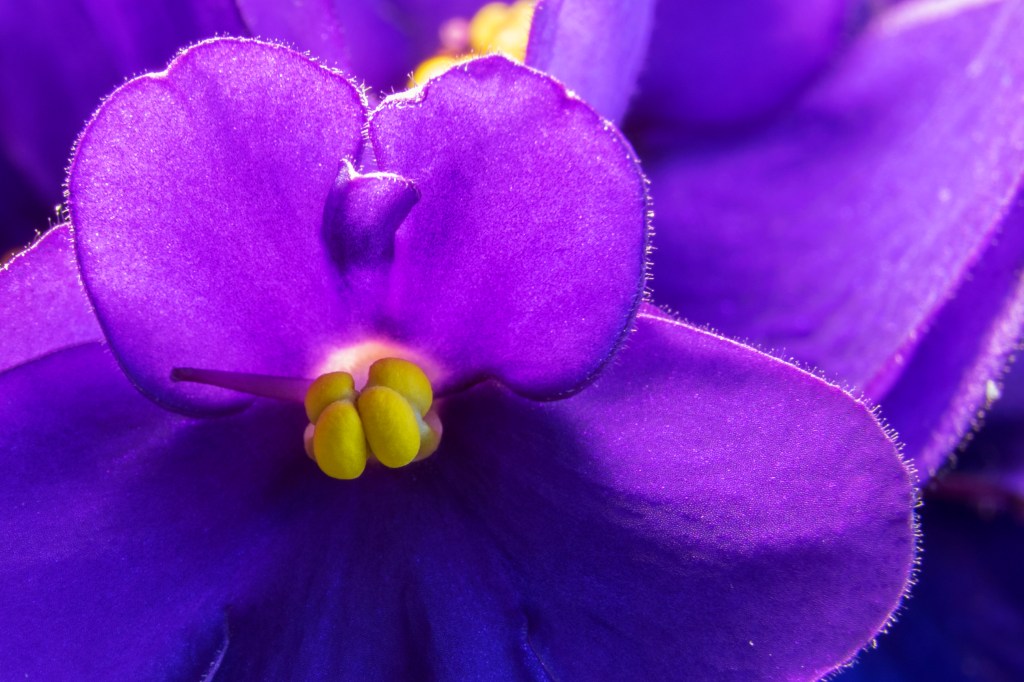
… Flowers …
As the name suggests, the colourful Usambara violet, a popular houseplant that adorns many homes in Germany, also originates from Tanzania. Colonial official Adalbert Emil Walter Le Tanneux von Saint Paul-Illaire sent seeds of the local Usambara violets to Germany, where they were classified and published in specialist magazines. The Latin name of the plant, ‘Saintpaulia ionantha’, refers to the German ‘discoverer’ who appropriated East African nature.
… and other biological colonial heritage
In 1902, the Amani Biological and Agricultural Research Institute was founded in Amani in the southern part of the Usambara Mountains. This was a colonial showcase project for applied scientific research in the fields of entomology, botany, parasitology, zoology, agriculture and forestry. Research into food and useful plants was primarily driven by the goal of making the colony profitable and rentable. The German Bacteriologist Robert Koch also conducted research here during his travels in Africa. His contribution to colonial tropical medicine, with questionable research methods such as cruel human experiments, has not yet been sufficiently addressed.
Further Information
- Heyden, Ulrich van der (2007): Koloniales Gedenken im Blumentopf: Das Usambara-Veilchen und sein „Entdecker“ aus Berlin, in: Ulrich van der Heyden und Joachim Zeller (Hrsg.): Kolonialismus hierzulande – Eine Spurensuche in Deutschland. 220–222. Erfurt: Sutton Verlag,
- Kreye, Lars (2021): »Deutscher Wald« in Afrika. Koloniale Konflikte um regenerative Ressourcen, Tansania 1892–1916, Göttingen: Vandenhoeck & Ruprecht.
- P. Wenzel Geißler, Rene Gerrets, Ann H. Kelly, Peter Mangesho (2020): Amani – Auf den Spuren einer kolonialen Forschungsstation in Tansania, Bielefeld: Transcript-Verlag
- Tanga Tourism Network Association (2011): Usambara Moutains & Lushoto, in: Tourism Guide for the Tanga Region, 64-81, online: www.tangatourism.org
 Decolonial Travel Guide Tanzania