Constanze Menard
In the southern highlands of Tanzania, there are several historically significant sites related to German colonial history, but unfortunately, many of them are not being preserved or documented. There is also a lack of museums, research and reappraisal in this area (yet).
Kimani Waterfalls
The Mpanga-Kipengere Nature Reserve is home to the large Kimani Waterfall, which is linked to the biography of Chief Mkwawa. Chief Mkwawa held secret meetings of his military in what is now a protected area and hid temporarily in the caves directly adjacent to the waterfall. All of this is accessible today and is well guided, narrated and explained by the rangers.
Kidugala
The village of Kidugala is one of the older German mission stations and is situated in a secluded and beautiful location in the foothills of the Livingston Mountains. All the buildings (church, old school, vicarage) have been preserved. During the Second World War, Polish refugees were settled in the village (see Sikorski-Majski Pact), which is the subject of a small permanent exhibition on the church grounds. The archives of the active Bible school document the history of the mission and colonialism.
Utengule (Njombe)
The village has a historical monument commemorating the war between the Wabena and the Germans.
Tukuyu
The town was founded in 1900 by the German colonial power as ‘Neu Langenburg’ on a hill. The original Fort Langenburg (today Lumbila) had been destroyed by the rising water level of Lake Nyassa and had become uninhabitable. The new town gave the entire ‘Langenburg’ region its name and was an important regional political centre.
Kisiba
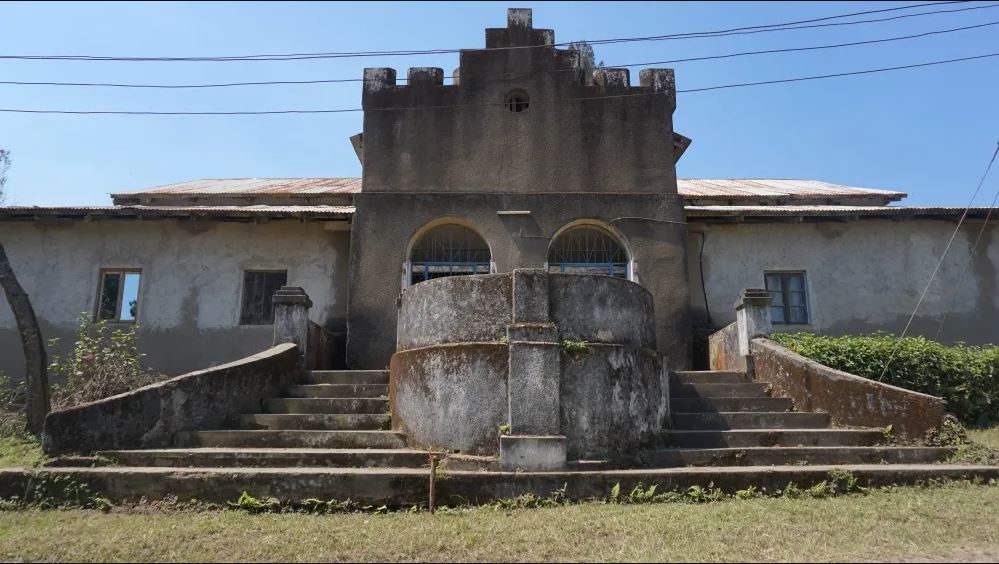
A few kilometres from Tukuyu is the crater lake Kisiba, where there are still some buildings of a German boma, some of which are still in use, some of which are in ruins. You can swim safely in the small but very deep lake itself. Legend has it that after the outbreak of war, the German military withdrew/fled from the area and threw everything that was not portable and should not fall into British hands into the lake and sank it. Copper coins are said to have been collected until the 1980s.
Musomba
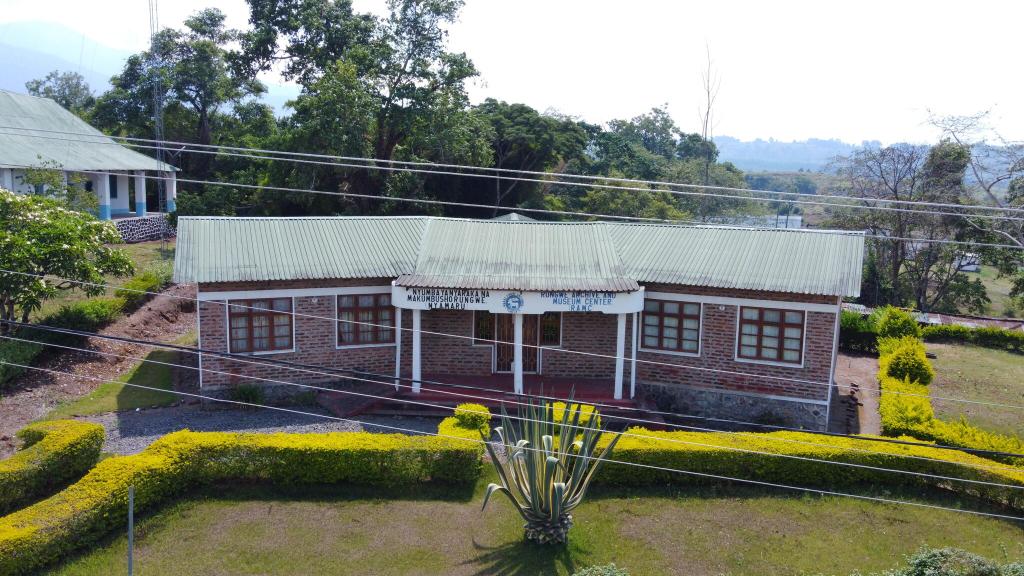
Tukuyu is also home to the headquarters of the Moravian Church and the KMKT for the Rungwe region and southern Tanzania. Since 1991, there has been an archive and museum project (Rungwe Archive and Museum Centre) that collects the history of the Moravian mission, the southern highlands and the regional population in order to preserve documentary and photographic material.
Liuli (Ruvuma)
This is a place on Lake Malawi that was named Sphinx Harbour by the German colonial power and used as a port of departure for the further colonisation of the southern highlands. The land route was impassable due to resistance fighting by the Wahehe. The name ‘Sphinx’ is attributed to the seven mysterious rock formations located in the water. ‘Sphinx Harbour’ has gone down in history as the site of the very first action of the German Navy in the First World War.
 Decolonial Travel Guide Tanzania