Lena Luise Mattmüller
After my first stay in Tanzania in 2022 for volunteer work, I immediately fell in love with the country. So it was clear that I would spend my time looking for a job in beautiful Dar es Salaam instead of cold Germany. What my first stay also showed me was how little I knew about Tanzania’s history, especially about the German colonial period. Before flying back in February 2023, I took the opportunity to educate myself a little more. As I also wanted to explore the country, I quickly came up with a plan to take the railway built by the German colonial rulers to explore the traces of this period. I had already visited the cities of Dodoma and Mwanza, but only learned afterwards that they had been founded by German colonialists. And I couldn’t remember feeling this history in the present, with the exception of obvious names such as Bismarck Rock in Mwanza. My idea was therefore to keep my eyes open for traces of German colonialism this time, to inform myself as well as possible in advance and otherwise to embark on a ‘voyage of discovery’ into German history, once again with a European view of Tanzania.
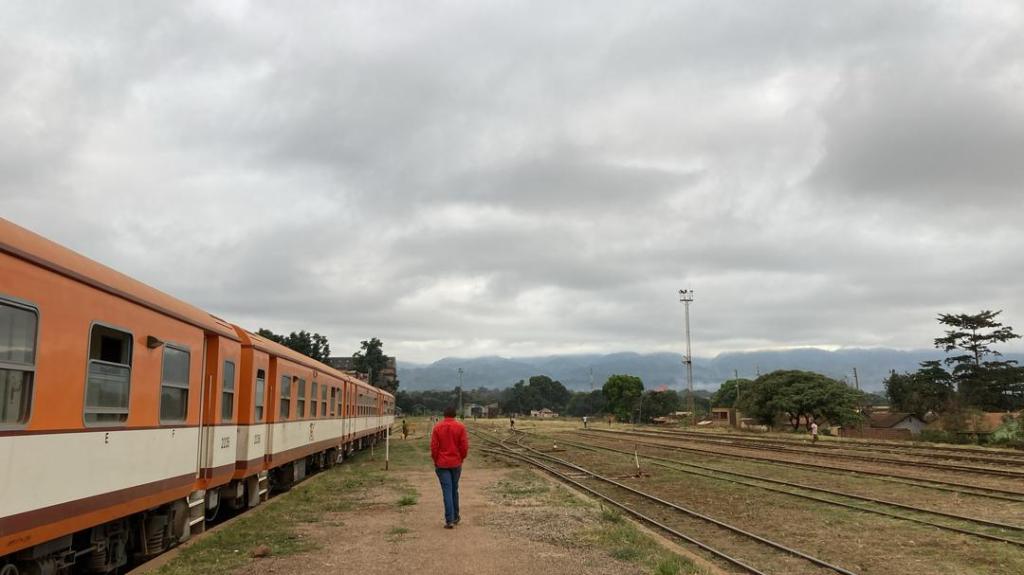
The Train (c) Lena Mattmüller 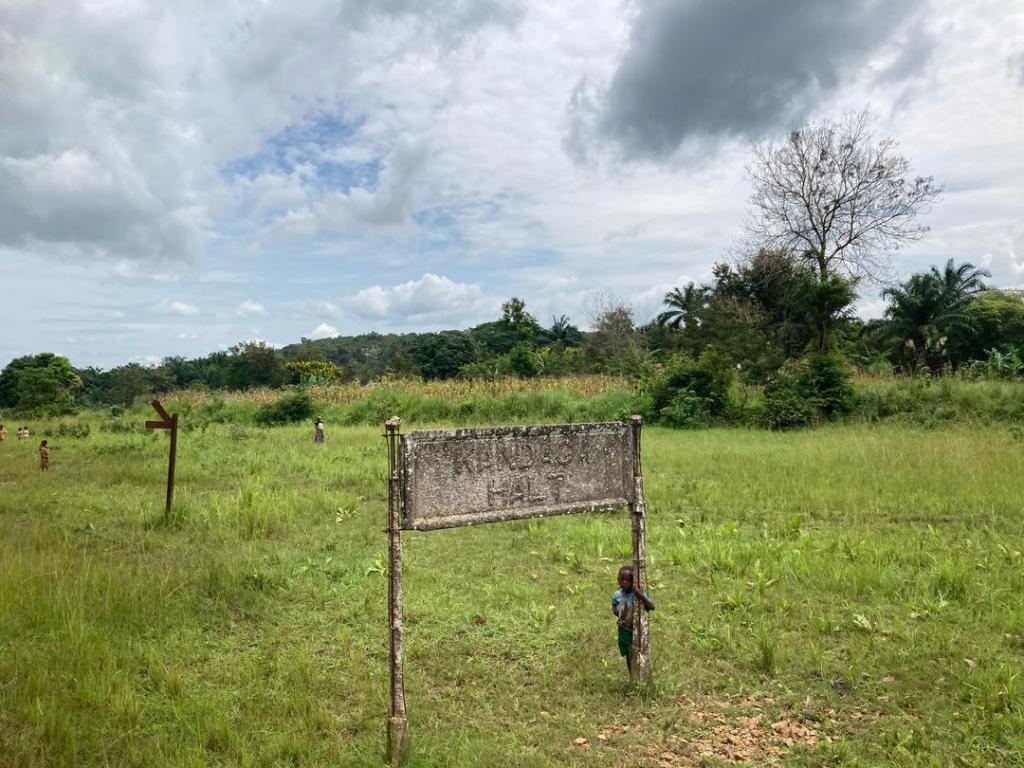
„Halt“ (c) Lena Mattmüller 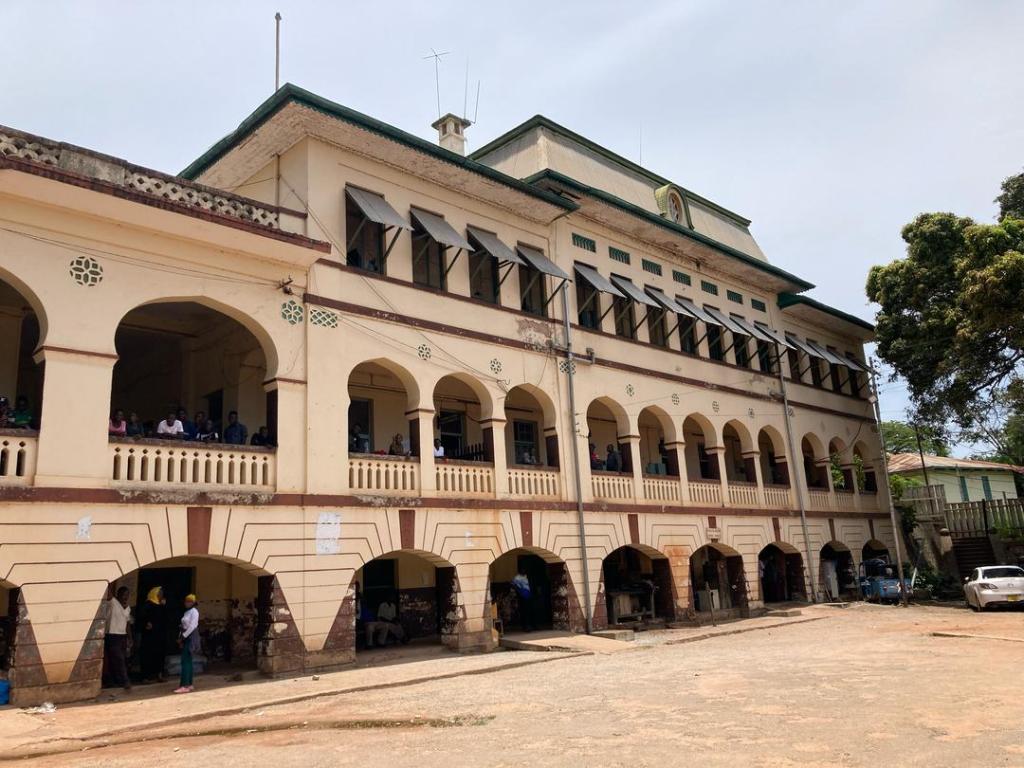
in Lugufu (c) Lena Mattmüller 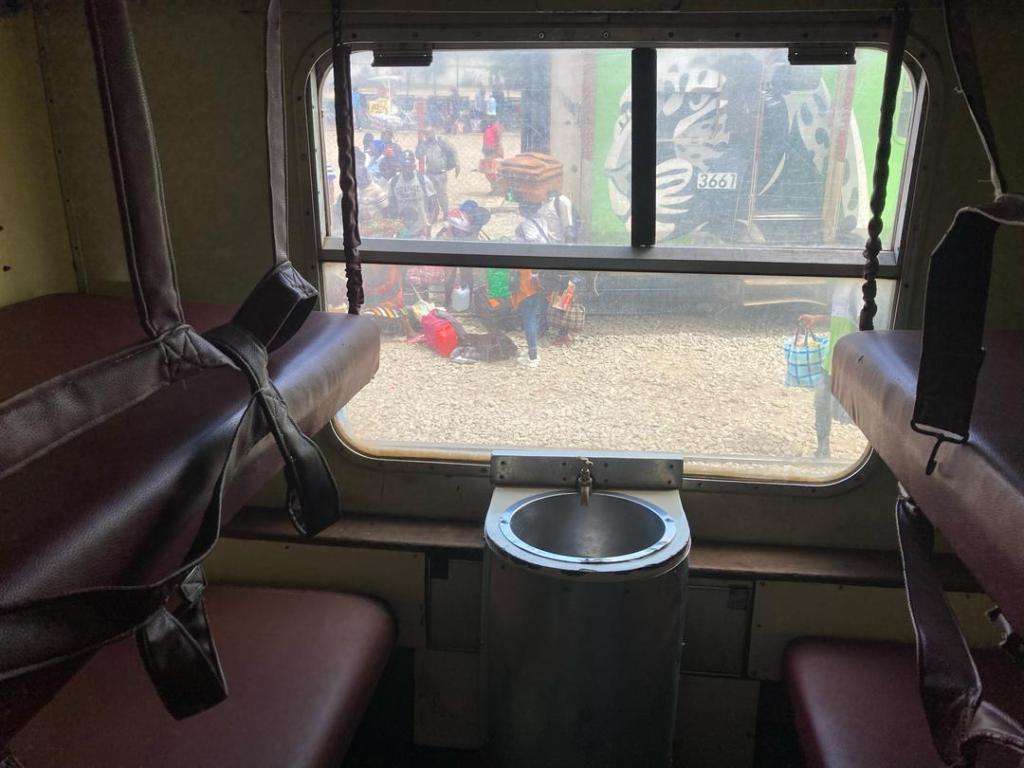
in the train (c) Lena Mattmüller (3) 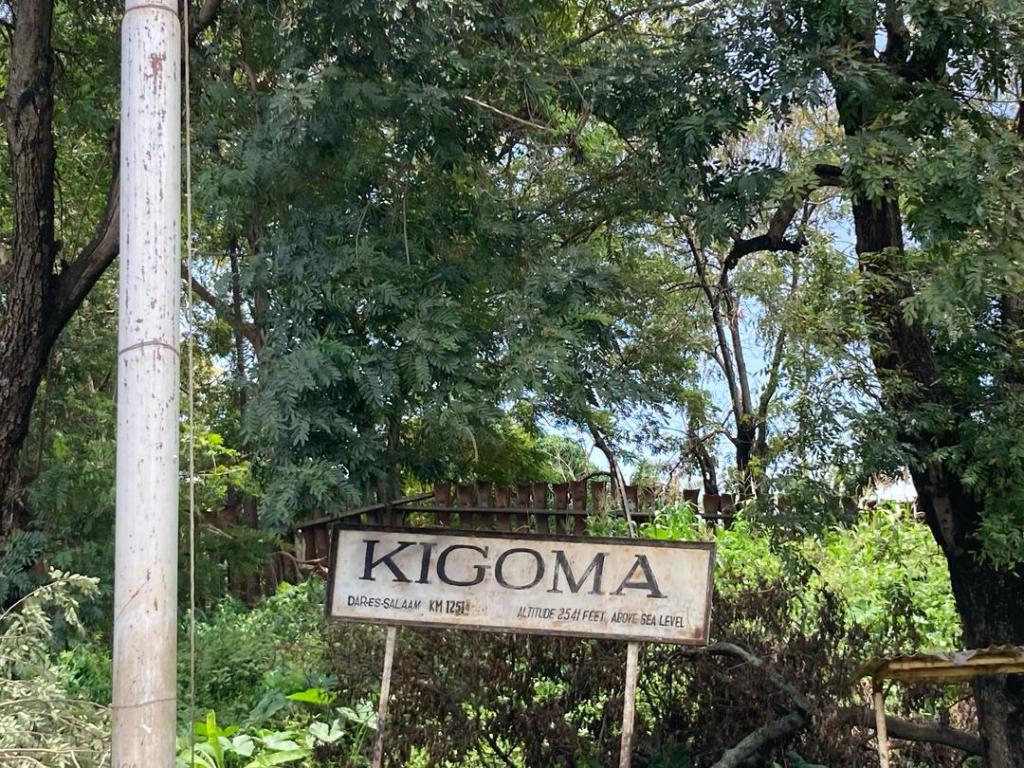
Kigoma Station (c) Lena Mattmüller 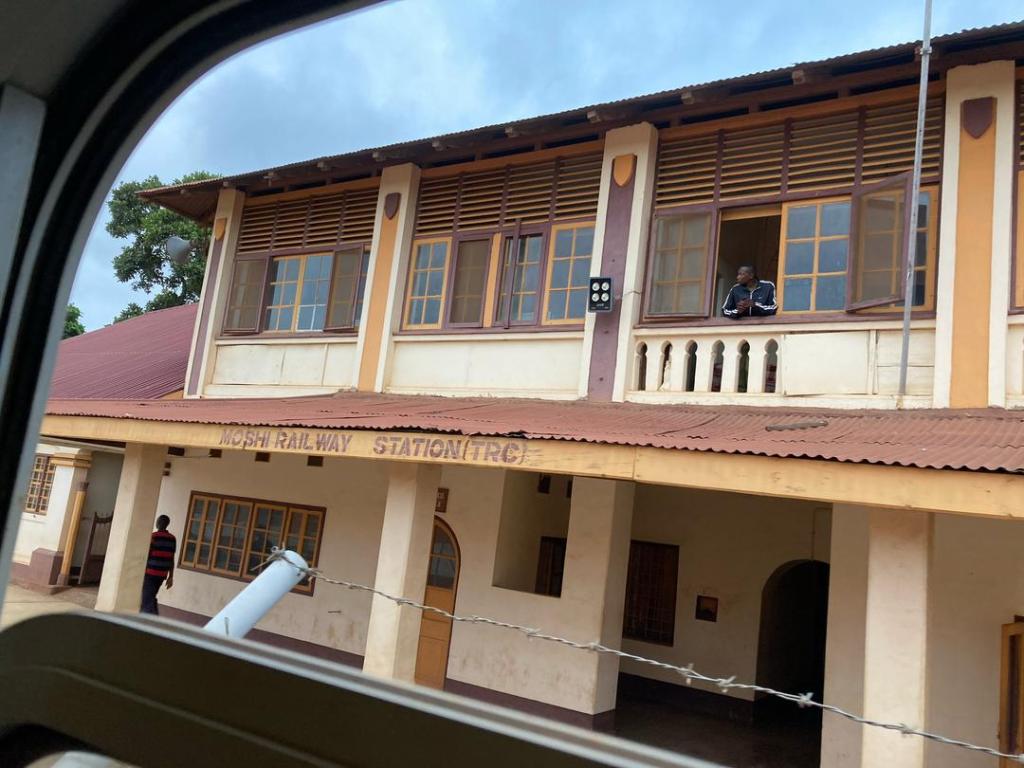
Moshi Railway Station (c) Lena Mattmüller 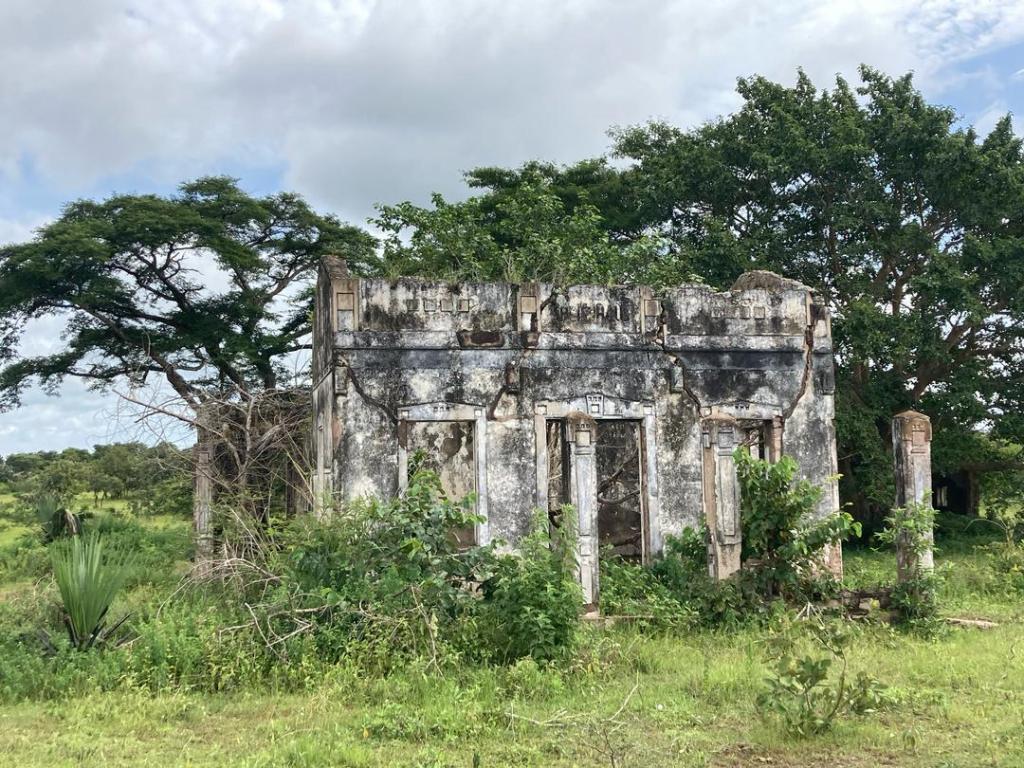
Ruin of an old German Station in Lugufu with a sign Speisehaus (Food Hall) (c) Lena Mattmüller 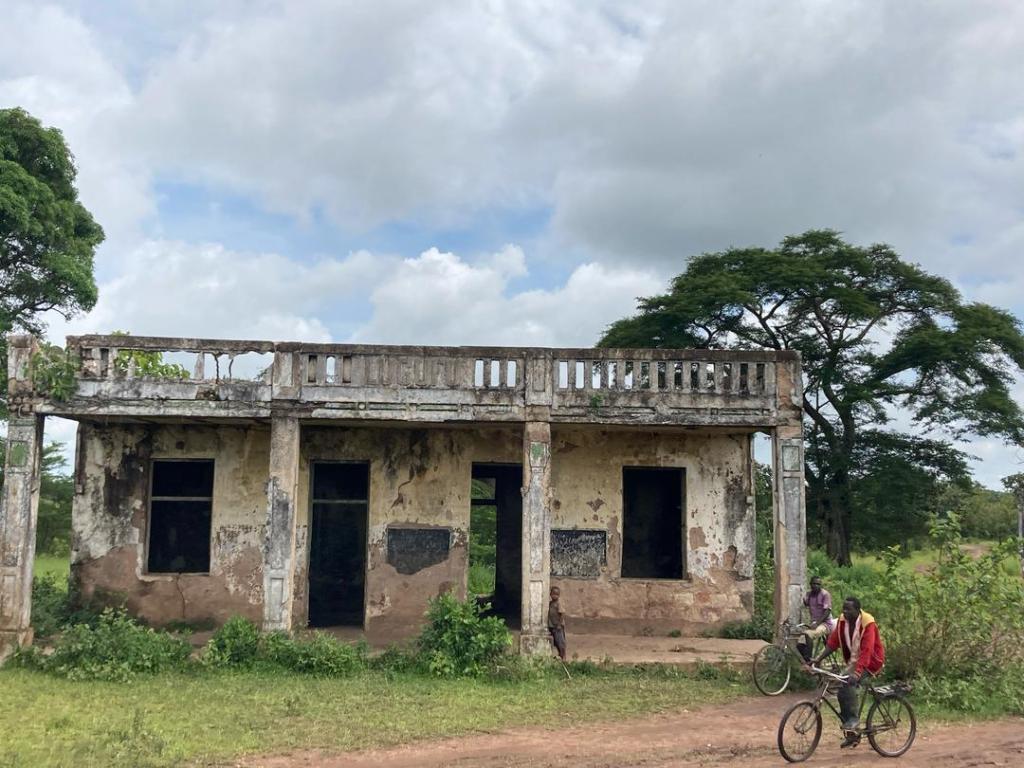
Ruin of the Old German Station in Kigoma (c) Lena Mattmüller 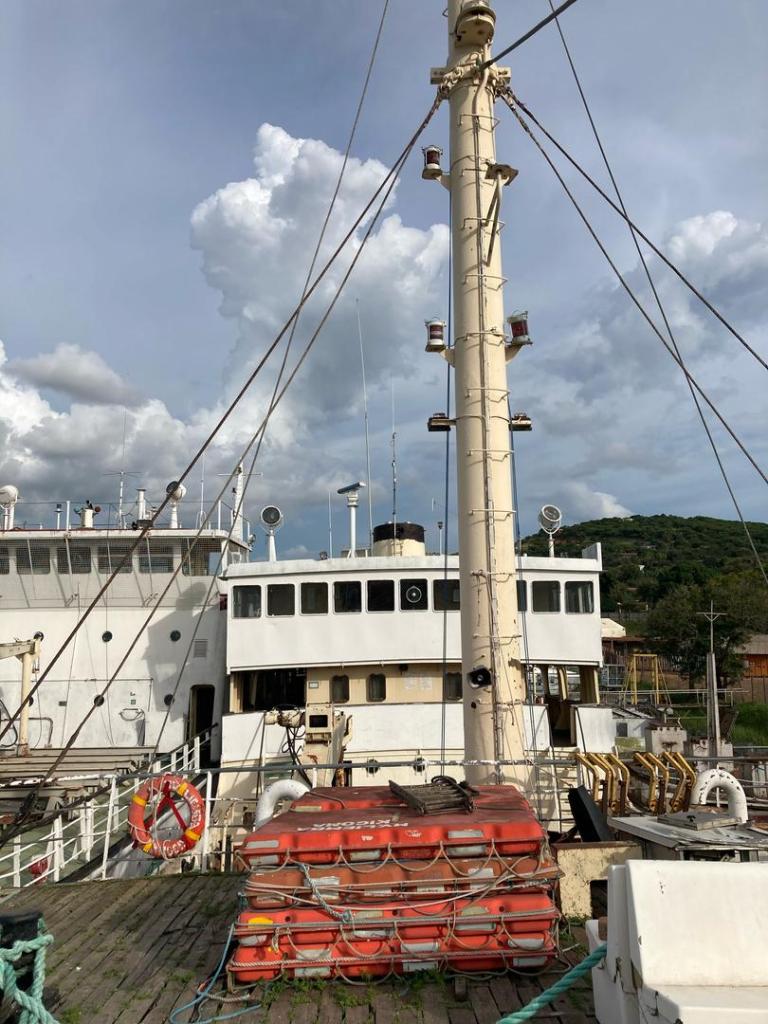
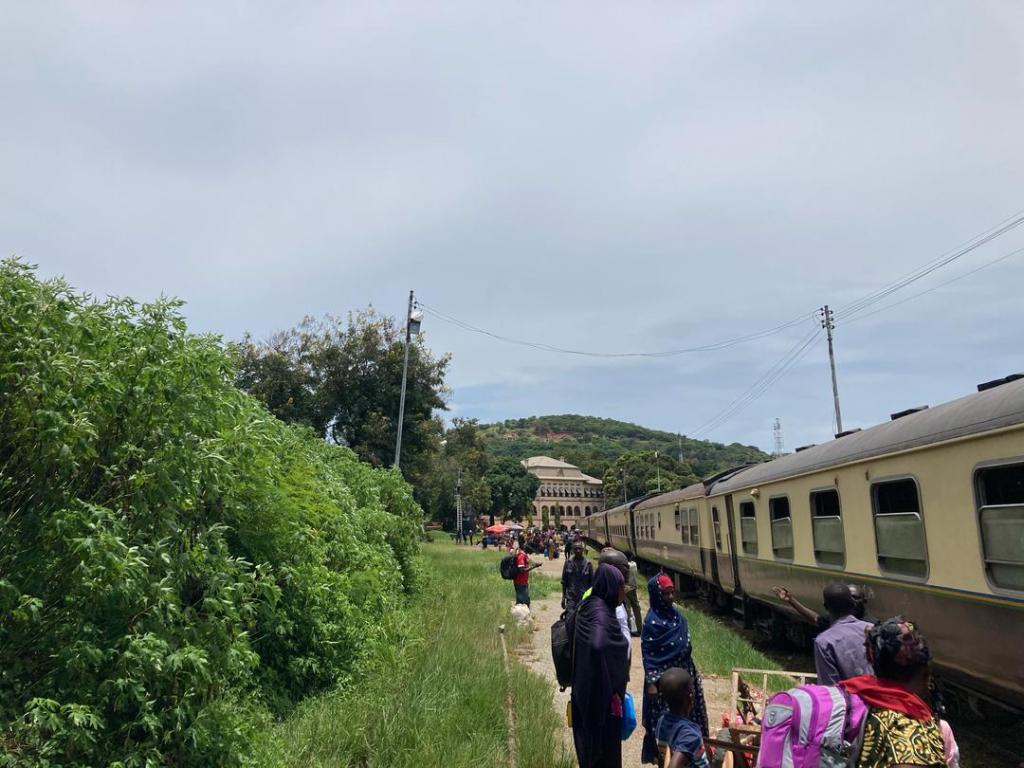
The Train (c) Lena Mattmüller
Departure from Dar es Salaam
After not only managing to find the train station in Dar es Salaam – the colonial main station was undergoing restoration – but also navigating the ticket purchase process, a few days later I found myself standing in front of the old Central Line train, formerly the Mittellandbahn, which seemed to be cobbled together from various carriages. My seat was in 2nd class, in the sleeping car compartment. Although my compartment was designed for six women, this automatically included their children. So there were ten of us sitting in the tiny compartment, including luggage and food for the two-day train journey. What impressed me were the buildings that the train passed at a leisurely pace, which obviously dated from the German era. Whereas I had previously had difficulty identifying German colonial buildings, I now recognised more and more of the German colonial style of the railway stations. One even had the German word ‘Halt’ (Stop) written on a large sign, and I could also read the German word ‘Speisehaus’ (Food Hall) on one of the ruins the train passed.
Arrival in Kigoma
After a journey of almost 45 hours, we reached Kigoma, in western Tanzania on Lake Tanganyika. It is considered one of the deepest and oldest lakes in the world. The impressive colonial railway station, which also marks the end of the line, opened up before us. I could already see my next destination from the train: the Liemba, a former gunboat that Germany had transported to Lake Tanganyika during the First World War using the same railway that I had taken to Kigoma. I had previously found out that the ship still bore the German name ‘Götzen’ at that time. Since I was unable to find any current information about the Liemba, I was all the happier that the ship was actually in the harbour. After paying an entrance fee to the port workers, I was allowed onto the dock and was shown around the ship. There I learned that the Liemba is to be restored so that it can once again sail to Zambia as a passenger ship, as it has done for the past 100 years. I spent the next few days in Kigoma searching unsuccessfully for Emperor Wilhelm’s hunting lodge. My guide on the Liemba had already identified me as someone with an obvious interest in the ship, but he didn’t understand what attracted people ‘like me’ to the rusty barge.
Stopovers in Tabora, Dodoma and Iringa
On my way back to Dar, I travelled by bus, stopping in Tabora and the capital Dodoma, both centres of the former German colonial administration. The capital in the centre of the country was founded in 1907 by German colonialists, but even there – as in Tabora, which became a trading centre for Germans with the construction of the railway – the search for colonial remnants proved difficult. I was unable to identify buildings or important places from the colonial era with my limited knowledge of history and internet research.
This only changed in Iringa, in the southern highlands of Tanzania. The city’s origins were a direct consequence of the Hehe War, which took place between 1891 and 1898, mainly in the region around Iringa. The Hehe, led by their chief Mkwawa, fought against the German colonial rulers but were ultimately defeated. Museums and sacred sites in the city still commemorate this today. The guided tours of the Boma, built in 1894, were particularly informative. The tour offered an interesting mix of colonial and local cultural history about the Hehe, a community known for its dances, music and traditional crafts.
North to Moshi and Arusha
On later train journeys along Tanzania’s first railway, the Usambara Railway, which once ended in Moshi with the German railway station, I could still see the influence of the colonial era. In touristy Arusha, there was also a museum in the former boma with an exhibition on the colonial era. Even the newly built SGR express train from Dar to Dodoma, which has been in service since 2024, follows the route of the German colonial railway and uses former double-decker carriages from Deutsche Bahn.
At the end of my trip, I was left with an ambivalent feeling of amazement: at how strongly Tanzania is still influenced by German colonial rule in its infrastructure, whether in the form of cities or transport. And also amazement at how little this knowledge is present in Germany – and previously also in me. My amazement grew into shame at my own ignorance about these remnants of German foreign rule, which Tanzanians see and use every day. Buildings, stories, railways and names from German colonial rule live on in Tanzania, while they remained hidden from me for so long and often still do.
 Decolonial Travel Guide Tanzania