
Henriette Seydel
Serengeti – an enchanting word that evokes longing. Safari adventures, breathtaking nature, herds of elephants in front of Kilimanjaro, giraffes at sunset. These beautiful images shape the tourist’s view of Tanzania. Tourism is considered an economic driver, with entrance fees to national parks financing environmental and species protection.
But the reality is more complex: national parks are also places of land conflicts and human rights violations. The history of national parks begins in the German and British colonial era.
People who lived there were deprived of their land, resources and sacred sites. Wild animals and nature were declared the exclusive property of colonial officials, hunters and later tourists. The appropriation of land and natural resources in the name of conservation is also known as ‘green grabbing’ or ‘green colonialism’.
The first wildlife reserve in German East Africa was established in 1896 by German governor Hermann von Wissmann in the Rufiji region in the south-east. After the Maji Maji War, the area could be expanded because it had been depopulated. The colonial rulers responded to resistance by destroying villages and fields. Those who did not die of hunger or violence fled. Bushland and wildlife spread again. Today’s Nyerere National Park was formerly called Selous, named after the English big game hunter Sir Frederick Selous.
Another example of the displacement of local people is the Ngorongoro Crater and Serengeti area. In 1904, German settler Adolf Siedentopf began cattle breeding and agriculture in an area where the Maasai, Barabeig and Sonjo had lived since the 18th century. The locals had to leave their homes or were forced to work on the farm. Remnants of the walls and steps can still be seen today. Historian Bernhard Gissibl describes the ruins as a stumbling block in human history in this supposedly untouched natural paradise.
Tourism advertising with images of ‘authentic’ wilderness
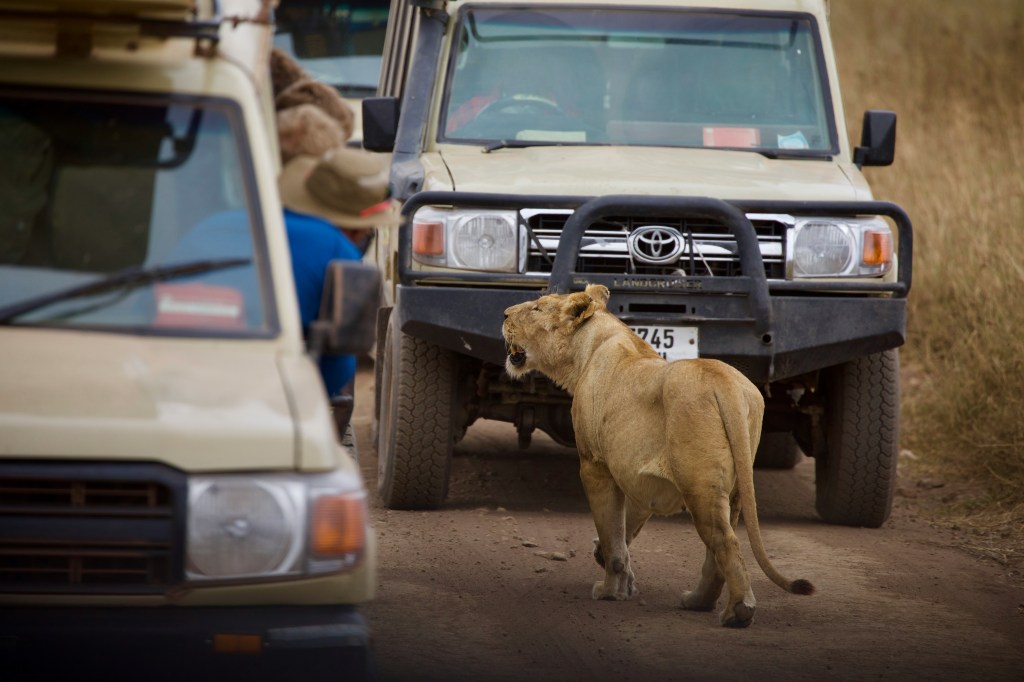
Since the 1950s, the beginning of what was then called Third World tourism, the Serengeti has been marketed as a wildlife-rich natural paradise without humans. Africans appear only as props: as guides, hotel employees or photo motifs. The well-known German naturalist Bernhard Grzimek (‘Serengeti Shall Not Die’) played a major role in creating this idyllic image of nature. In the 1950s, he called for uninhabited protected areas for wild animals and promoted the ‘voluntary’ resettlement of local people.
Displacement in the name of nature conservation and tourism remains an issue today
In order to achieve international nature conservation goals in times of climate change, protected areas in Tanzania are to be expanded from 30 to 50% of the country’s territory. This requires the resettlement of the people living there. According to the government, population growth threatens fragile ecosystems, as increased grazing areas and livestock farming would restrict the habitat of wild animals. However, studies show that indigenous communities rarely have a negative impact on the environment. On the contrary, regions where the Maasai live, for example, often have a high level of biodiversity. Tanzania’s government speaks of voluntary resettlement; new houses, infrastructure and schools have been provided, but some are hundreds of kilometres away. Many are critical of this voluntary approach, as security forces, police and armed gamekeepers have forcibly evicted Maasai. Protests have been violently suppressed in some cases, and demonstrators have been imprisoned. Those affected have taken legal action against land grabbing, eviction and human rights violations, suing the Tanzanian government.
Continuation of colonial, unequal structures
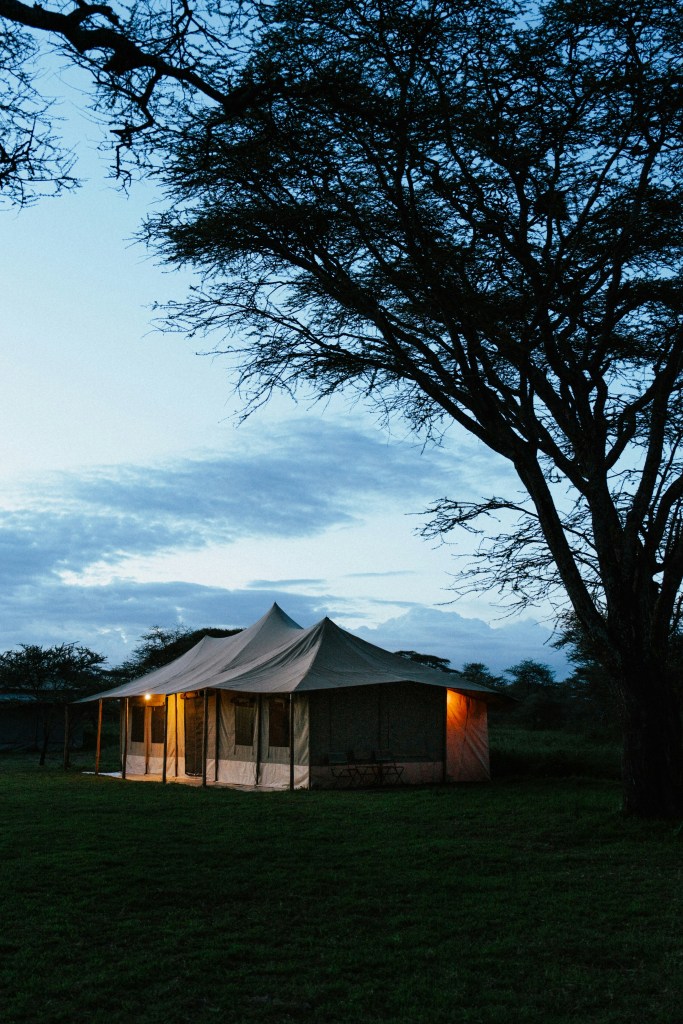
Critics see economic interests at the forefront: hunting grounds, luxury lodges and airfields are to be expanded – at the expense of local communities. This raises questions about the logic of such measures. How absurd is it that Maasai are to leave the national parks for nature conservation reasons, while more people are allowed in – people who hunt the very animals that need protecting? And that this is accompanied by environmental pollution from flights, jeeps, high water consumption and waste? How is it that Maasai houses, health centres or schools for their children are a problem for animals and the environment, but five-star hotels and campsites are not?
Last but not least, foreign companies and investors often benefit more from the travel boom and safari tourism than local communities. Many safari lodges and tour operators are non-African or belong to the Tanzanian elite. Employees (e.g. guides, drivers, cooks) often have precarious working conditions. According to the Tanzanian government’s plans, domestic tourism is currently being expanded, but safaris remain expensive and are therefore inaccessible to the majority of the Tanzanian population.
Further Information
- Gesellschaft für bedrohte Völker (2023): „Die Maasai in Tansania: Gewaltsam vertrieben für den Naturschutz“, online: www.gfbv.de/fileadmin/redaktion/Meldungen/2023/GfbV_Report_Massai.pdf
- Gissibl, Bernhard (2019): “The Nature of German Imperialism. Conservation and the Politics of Wildlife in Colonial East Africa”, New York, Berghahn.
- Moko, Laibor Kalanga und Bens, Jonas (2022): “Colonial conservationism: wildlife, tourism and land expropriation in Africa”, Review of African Political Economy, online: www.roape.net/2022/07/07/colonial-conservationism-wildlife-tourism-and-landexpropriation-in-africa/
- Naturschutzes“, online: www.tanzania-network.de/themen/maasai-vertreibungen
- Prush, Julian: Natur- und Wildschutz in Deutsch-Ostafrika: Ein koloniales Erbe?, online: www.goettingenkolonial.uni-goettingen.de/index.php/disziplinen/forstwissenschaften/natur-und-wildschutz-in-deutsch-ostafrika
- Rushohora, Nancy (2024): German Colonialism in Southern Tanzania: Transgenerational Impacts on Resource-Induced Conflicts, online: www.swp-berlin.org/en/publication/german-colonialism-in-southern-tanzania-transgenerational-impacts-on-resource-induced-conflicts
- Tanzania Network e.V. (2024): „Themenwoche: Die Vertreibungen der Maasai im Namen des Naturschutzes“, online: www.tanzania-network.de/themen/maasai-vertreibungen.
What can you keep in mind on your next safari? Which socially and environmentally responsible safari operators do you know? → Discuss and share your knowledge with other readers!
 Decolonial Travel Guide Tanzania